Dark Circles Under Eyes: Causes, Treatments, and How to Brighten Them
Dark circles under eyes are rude. You can sleep, drink water, feel amazing, and still look in the mirror like: "Why do I look like I have been awake since Thursday?"

The truth is, under-eye darkness is incredibly common. It can show up as blue, purple, brown, gray, or almost black depending on your skin tone, lighting, and what is causing it.
Cleveland Clinic says dark circles can come from aging, genetics, allergies, lack of sleep, dehydration, rubbing, sun exposure, and lifestyle factors like stress, alcohol, or smoking.
The good news? There are ways to improve them. The slightly annoying news? You need to know what kind of dark circles you have first.
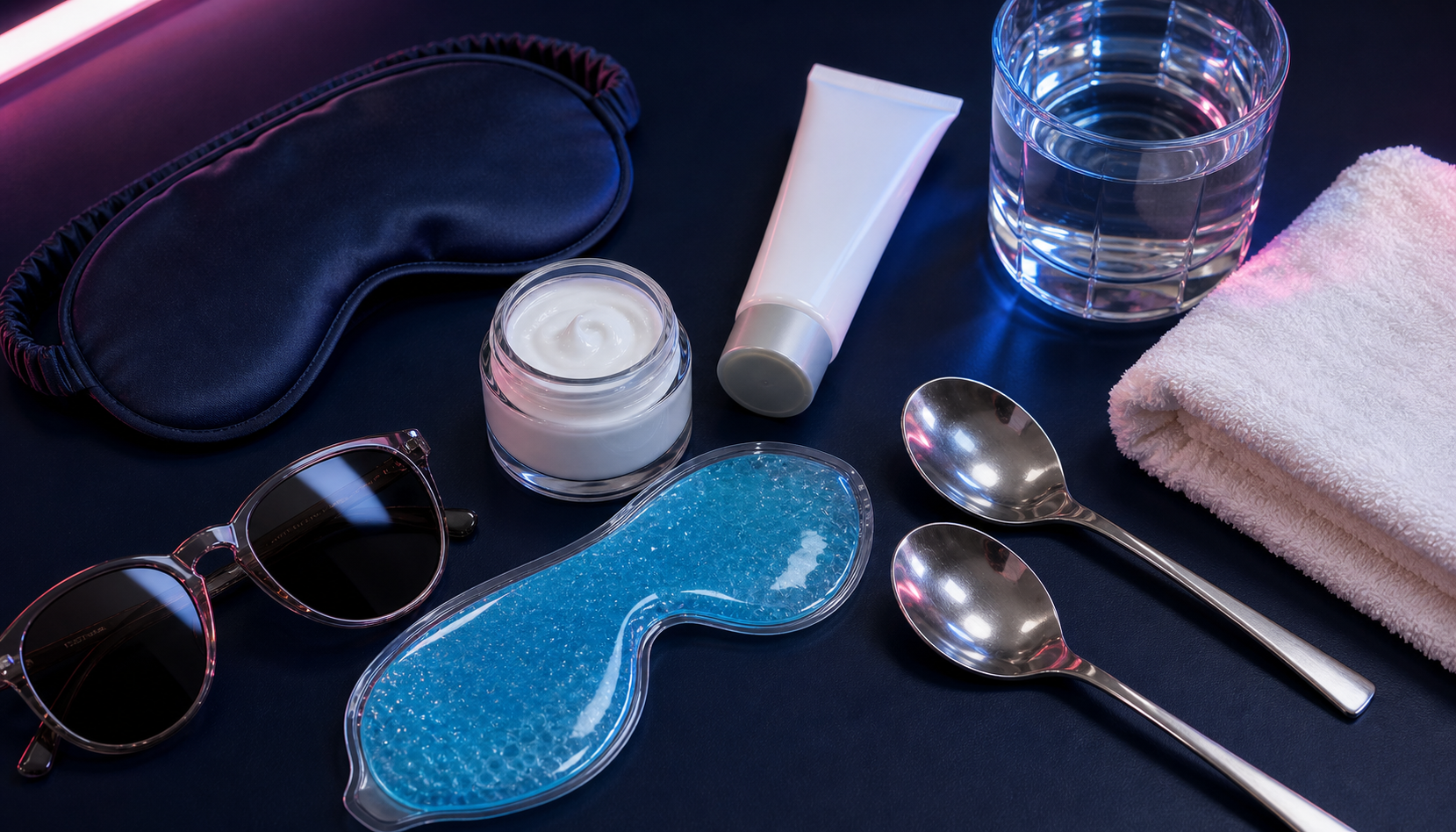
Cold Can De-Puff
A chilled compress can make puffiness look calmer before photos.
SPF Still Matters
Sunscreen and sunglasses help when sun-related pigmentation is part of the story.
Light Does Heavy Lifting
Soft window light beats harsh overhead bathroom lighting almost every time.
What Are Dark Circles Under Eyes?
Dark circles under eyes happen when the skin beneath the eyes looks darker than the rest of your face. Mayo Clinic explains that they are often more noticeable when you are tired, and sometimes what looks like darkness is actually shadow from puffy eyelids or hollows that develop with aging.
In normal-person language: your under-eyes can look dark because of pigment, shadows, thin skin, blood vessels, puffiness, or face shape.
That means there is no one magic cream that fixes every dark circle. If there were, it would be sold out forever and guarded by celebrities.
What Causes Dark Circles Under Eyes?
1. Lack of Sleep
Sleep does not always create dark circles from scratch, but it can make existing circles look worse. When you are tired, your skin can look paler and duller, making shadows and blood vessels more obvious.
2. Genetics
Some people simply inherit darker under-eyes. If your family has dark circles, you may have received the under-eye deluxe package.
3. Thin Skin and Visible Blood Vessels
The skin under your eyes is delicate. As it gets thinner with age, blood vessels can show through more easily, creating blue or purple-looking darkness.
4. Pigmentation
Sometimes the darkness is actual pigment in the skin, often brown-toned. Sun exposure, inflammation, eczema, contact dermatitis, and rubbing can contribute to pigmentation under the eyes.
5. Allergies and Rubbing
Allergies can make your eyes itchy. Itchy eyes lead to rubbing. Rubbing leads to irritation, swelling, broken tiny blood vessels, and more darkness.
6. Dehydration
When you are dehydrated, your under-eye area can look dull, sunken, or shadowy. This does not mean water is a miracle eye serum, but being dehydrated definitely does not help.
7. Hollow Tear Troughs
Sometimes the dark circle is actually a shadow caused by facial structure. If the area under the eyes has a hollow or dip, light hits it in a way that makes it look darker.
Dark Circles vs Eye Bags
Dark circles and eye bags are not the same thing, but they love appearing together like an annoying double act.
Dark circles mean darkness, discoloration, or shadows. Eye bags mean puffiness, swelling, sagging, or bulging.
Sometimes puffiness casts a shadow, making the under-eye area look darker. Mayo Clinic notes that puffy eyelids or hollows can create shadows that look like dark circles.
So before you buy a dark-circle miracle cream, ask: is this darkness, puffiness, hollowing, or all three?
How to Get Rid of Dark Circles Under Eyes

1. Use a Cold Compress
If your dark circles look blue, purple, or puffy, a cold compress can help temporarily. Try a cold spoon, cold washcloth, chilled eye mask, wrapped ice pack, or cold tea bags.
2. Sleep Better
Sleep will not fix every dark circle, but it can make you look less haunted. Aim for more consistent sleep, and try raising your head slightly if puffiness joins the party.
3. Protect Your Under-Eyes From the Sun
Sun exposure can worsen pigmentation, especially if your dark circles are brown-toned. Use sunscreen, sunglasses, and stop treating SPF like an optional personality trait.
4. Treat Allergies
If your eyes are itchy, watery, or irritated, allergies might be making things worse. Less itching means less rubbing, less irritation, and less darkness.
5. Stop Rubbing Your Eyes
Rubbing can make the skin more irritated and the blood vessels more visible. Your under-eye area is not a touchscreen that needs aggressive swiping.
6. Try Useful Eye-Cream Ingredients
Eye creams can help a little, depending on the cause. Ingredients worth looking for may include caffeine, vitamin C, vitamin K, kojic acid, and gentle retinoids if tolerated.
7. Use Makeup Strategically
For fast photo improvement, try peach or orange corrector for blue-purple darkness, lightweight concealer, less powder under the eyes, bright inner-corner highlight, and soft natural light.
Professional Treatments for Dark Circles
If home fixes do not help, the issue may be deeper pigmentation, hollowing, skin laxity, or blood vessels. Professional options may include:
Cleveland Clinic lists topical creams, chemical peels, laser therapy, tissue fillers, blepharoplasty, and PRP injections as medical options for dark circles. These treatments should be done by experienced professionals because the under-eye area is delicate.
When Should You See a Doctor?
Dark circles are usually not a medical problem. But if the darkness or swelling is under one eye only, gets worse over time, or comes with pain, sudden swelling, redness, or vision changes, get checked.
Mayo Clinic specifically advises talking to a healthcare professional if color changes and swelling under just one eye get worse over time.
Most of the time, dark circles are cosmetic. But sometimes your face is trying to send a memo.
Quick Under-Eye Brightening Plan
No lemon juice. No toothpaste. No I-saw-this-on-TikTok-and-now-my-eye-is-burning experiments.
Photo Tips for Dark Under Eyes
Sometimes your dark circles are not that bad. Sometimes your lighting is just evil.
Final Takeaway
Dark circles under eyes can come from sleep, genetics, aging, allergies, pigmentation, dehydration, thin skin, puffiness, or facial structure.
That is why one person's miracle fix does nothing for someone else.
If your dark under-eyes are mild, start with sleep, cold compresses, sunscreen, allergy control, and gentle skincare. If they are deep, stubborn, or caused by hollows or pigmentation, professional treatments may help.
Your under-eyes may look tired. That does not mean you are not still cute. A little brightness, better lighting, and the right fix can go a long way.